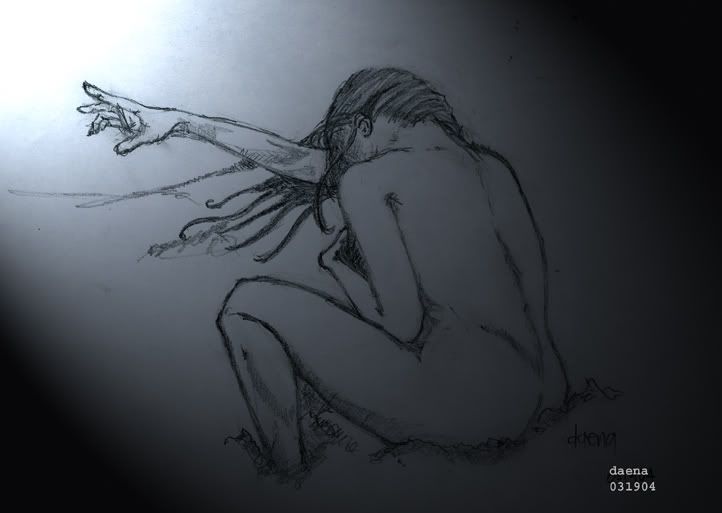
One of my all-time favorite sci-fi novels is Robert Heinlein’s The Number of the Beast, published in 1980. (This wonderful book parodies the pulp fiction novels of the 30s, as well as paying homage to the Martian novels of Edgar Rice Burroughs.) In this story however, the biblical “number of the beast” turns out to be, not 666, but 6 to the power of 6 to the power of 6 or 10314424798490535546171949056, which equals the number of parallel universes that Zeb, Deety, Jake and Hilda could have visited if they’d had the time…
Parallel universes fascinate me… all those what-if worlds of the past, present and future – I’ve often wished I had a way of finding out what might-have-been in my life, if only I’d chosen a different path to the one I did…
When I was 17, way back in the Dark Ages, there was no such thing as career guidance. I was the oldest child, first of four, and I hadn’t a clue as to what I wanted to do with my life. I knew I liked literature, writing, film, drama, English – but somehow, choosing a career that started with a university education just never came up for discussion. Maybe my parents couldn’t afford it? Maybe we thought I didn’t have the brains for it? I can’t remember. What I do remember is that in the middle of my matric year, my grandmother got sick. I visited her in the state hospital and I remember light, bright airy wards, where the sun shone in through big windows and the gardens outside were dominated by oak trees, squirrels, lilies and agapanthus. The nurses were sweet-smiling, calm, moving round the wards in their starched white uniforms with starched white caps and shiny laced-up shoes. It felt magical to me.
I applied, got accepted and six months later, started my training at that same hospital. My ‘A’ for English, my love for literature and words, my interest in drama—ended up submerged in the nursing world for the next twenty years. The closest I got to literature was reading books like The Magus (John Fowles), The World according to Garp (John Irving) and The Hitchhiker’s Guide to the Galaxy (the fabulous and late-lamented Douglas Adams). The closest I got to writing was documenting the bowel actions, aches, pains and pills of my patient’s in the nursing Kardex. The closest I got to drama was seeing Saturday Night Fever and Grease at the flicks!
I’ve worked in nursing almost non-stop since then. Sometimes fulltime, sometimes part time, sometimes day, sometimes night, through singleness and marriage, though my ex-husband’s three years at bible college, through two pregnancies when we subsisted on my income and the good graces of his parents, through the drawn-out months of the divorce, through the two and a half years of my post-divorce health breakdown, through croup and bronchitis, through temper tantrums, childhood depressions and tonsillectomies, through the good and the bad times … I worked.
I have to say, though, that there were times when I really, really liked being a nurse. I like caring for people, relieving pain, advising, helping, counseling, supporting … I liked my years in psychiatry, I liked understanding what makes people tick, I liked learning … but I didn’t like the boring, repetitive nature of most days on the wards. I didn’t like getting up at 5.30 to be at work by 6:45am, I didn’t like leaving my babies with the nanny or the day mother or the crèche.
And during that time, I forgot that I used to like to write. I forgot that I had a vivid imagination. I forgot the joy of the printed word. Movies were for the weekends when the kids went to their dad, books were limited to Danielle Steele . I was in survival mode. Creativity showed up now and then in dreams about starting a business that would earn millions, in dreams of winning the Lotto, in dreams of meeting the real Mr. Right-for-me …
But in 2000, God put me through a bit of spiritual surgery, removing from my heart a dream that I’d clung to for several years. And in the aftermath, as I contemplated the aridity of my life-minus-the-fantasy, I started fiddling around with writing again. Puerile, imperfect scribblings littered my hard drive, words filled my mind, dreams fired up my imagination. I started a writers group, went to a couple of Christian writing conferences in the States (huge, unlooked-for blessings, both!) and moved out of the clinical field into working as a case manager / report writer and editor for a managed healthcare company. Retrenchment followed in early 2004 and I lived on UIF and a small redundancy package for six months before deciding to pursue a freelance writing / editing career.
Two and a half years later, we’re still living from hand to mouth, as I mix freelance work with occasional nursing shifts. Most of the work comes via a friend who runs a very successful graphic design studio, so I write and edit ads, brochures, folder inserts, directories and so on. When the work is there, the pay is great. When there’s no work, I do transcription (long hours, low pay but it’s at home) or nursing (long hours, mediocre pay, away from home). With some serious marketing, (not my strongest point), I reckon I could make a go of this, and still keep on writing fiction on my own time.
BUT … isn’t there always a ‘but’? BUT, there’s another dream in the pipeline. A good dream, a wonderful dream, a life-changing dream. A dream that will upset my current career applecart completely.
More tomorrow …
Saturday, June 3


Friday, June 2
Anna Quindlen said ...
“… I read and walked for miles at night along the beach, writing bad blank verse and searching endlessly for someone wonderful who would step out of the darkness and change my life. It never crossed my mind that that person could be me.”
This quote intrigues me. As a Christian, I learned that I need to let go, abandon my life to God, to leave all my hopes and dreams and desires in his hands. I also learned that no man could ever be that ‘wonderful person’ for me, because men are just as human and needy and imperfect as women—as I am--and no one man can ever meet my every need. So all I can do is leave my needs in God's hands, look to him for fulfilment, contentment, and love.
Reading Anna Q gives me pause for thought, though… and it's not a comfortable pause, either.
This quote intrigues me. As a Christian, I learned that I need to let go, abandon my life to God, to leave all my hopes and dreams and desires in his hands. I also learned that no man could ever be that ‘wonderful person’ for me, because men are just as human and needy and imperfect as women—as I am--and no one man can ever meet my every need. So all I can do is leave my needs in God's hands, look to him for fulfilment, contentment, and love.
Reading Anna Q gives me pause for thought, though… and it's not a comfortable pause, either.
Wednesday, May 31
Unravelling my life
I started reading Richard Foster’s book on prayer a few days ago, hoping to find my way back to the time when to breathe was to pray, and to pray was to know with unshakeable knowing that God IS and IS GOOD. Chapter One was Simple Prayer. ‘Dear God, help me! Bless me! Feed me!’ and so on. Prayer 101, so to speak. But Chapter Two is called The Prayer of the Forsaken and when I read it, something clicked deep inside.
"We know theologically that God is always with us, but theological niceties are little help when we enter the Sahara of the heart, when we experience real spiritual desolation ... we feel abandoned by God. Every hope evaporates the moment we reach for it. Every dream dies the moment we try to realize it. We question, we doubt, we struggle. We pray and the words seem empty... etc."
He goes on to explain what a blessing the dark night can be, as God uses it to strip us of dependence on outward things, like church and liturgy and control - and also strips us of dependence on inward things, like our superficial drives and human strivings and needs. I groaned in recognition of some of the things he said, like: "...we become tentative and unsure of ourselves. The nagging questions become relentless 'Is prayer only a psychological trick? Is there any real meaning in the universe? Does God really exist and if he does, is he good and intent on our goodness, or not?'” Yes and amen! Those are my questions! And yet, I feel so afraid and so guilty when they come spilling out of me, swooshing out on tides of tears and bitterness and desperation.
I recognize this place. I’ve been here before. The wasteland is familiar, full of pain and doubt and yearning. Two years ago, I spent nearly nine months in this place, and when I left it, I hoped it was for good. But it seems that for some reason, I’m back here again. Am I just depressed? It doesn’t feel that way. Am I stressed out? Maybe – but then, as a good Christian, shouldn’t I be clinging to God to get thru the stress, not standing here wondering if He’s real, or if He cares. But that’s exactly how I’ve been feeling of late.
Richard Foster goes on to say that through our barrenness of soul, God is producing detachment, humility, patience and perseverance. And he concludes this particular chapter with the words quoted above, spoken first by Bernard of Clairvaux: O my God, deep calls unto deep. The deep of my profound misery calls to the deep of your infinite mercy.
There are several areas that trouble me at present and that are so interwoven in my mind that it’s going to take a while to unravel them all. Things like our proposed emigration and related issues of what kind of work am I going to do for the next twenty years and where will I be doing it. Will I be spending the rest of my life alone, unloved and undesired by a man? Will I ever find contentment in God alone?
One thing at a time. Starting tomorrow….
Elleann.
Skating warily over thin ice.
"We know theologically that God is always with us, but theological niceties are little help when we enter the Sahara of the heart, when we experience real spiritual desolation ... we feel abandoned by God. Every hope evaporates the moment we reach for it. Every dream dies the moment we try to realize it. We question, we doubt, we struggle. We pray and the words seem empty... etc."
He goes on to explain what a blessing the dark night can be, as God uses it to strip us of dependence on outward things, like church and liturgy and control - and also strips us of dependence on inward things, like our superficial drives and human strivings and needs. I groaned in recognition of some of the things he said, like: "...we become tentative and unsure of ourselves. The nagging questions become relentless 'Is prayer only a psychological trick? Is there any real meaning in the universe? Does God really exist and if he does, is he good and intent on our goodness, or not?'” Yes and amen! Those are my questions! And yet, I feel so afraid and so guilty when they come spilling out of me, swooshing out on tides of tears and bitterness and desperation.
I recognize this place. I’ve been here before. The wasteland is familiar, full of pain and doubt and yearning. Two years ago, I spent nearly nine months in this place, and when I left it, I hoped it was for good. But it seems that for some reason, I’m back here again. Am I just depressed? It doesn’t feel that way. Am I stressed out? Maybe – but then, as a good Christian, shouldn’t I be clinging to God to get thru the stress, not standing here wondering if He’s real, or if He cares. But that’s exactly how I’ve been feeling of late.
Richard Foster goes on to say that through our barrenness of soul, God is producing detachment, humility, patience and perseverance. And he concludes this particular chapter with the words quoted above, spoken first by Bernard of Clairvaux: O my God, deep calls unto deep. The deep of my profound misery calls to the deep of your infinite mercy.
There are several areas that trouble me at present and that are so interwoven in my mind that it’s going to take a while to unravel them all. Things like our proposed emigration and related issues of what kind of work am I going to do for the next twenty years and where will I be doing it. Will I be spending the rest of my life alone, unloved and undesired by a man? Will I ever find contentment in God alone?
One thing at a time. Starting tomorrow….
Elleann.
Skating warily over thin ice.
God? Where are you?
“O my God, deep calls unto deep. The deep of my profound misery calls to the deep of your infinite mercy.” Bernard of Clairvaux
“God, where are you!?
What have I done to make you hide from me? Are you playing cat and mouse with me or are your purposes larger than my perceptions? I feel alone, lost, forsaken.
You are the God who specializes in revealing yourself. You showed yourself to Abraham, Isaac and Jacob. When Moses wanted to know what you looked like, you obliged him. Why them—and not me?
I am tired of praying.
I am tired of asking.
I am tired of waiting.
But I will keep on praying and asking and waiting because I have nowhere else to go.”
Taken from Richard Foster’s book Prayer – finding the heart’s true home
I’m walking in a fog at present, living somewhere between hope and despair. There is too much in life for me to cope with right now, and God seems absent. Stone cold, granite-faced, not-there … and the only way I know to deal with it is to try and write it down. I barely have the energy to do even this, so when I read the above this morning, I thought it would at least be a place to start.
“God, where are you!?
What have I done to make you hide from me? Are you playing cat and mouse with me or are your purposes larger than my perceptions? I feel alone, lost, forsaken.
You are the God who specializes in revealing yourself. You showed yourself to Abraham, Isaac and Jacob. When Moses wanted to know what you looked like, you obliged him. Why them—and not me?
I am tired of praying.
I am tired of asking.
I am tired of waiting.
But I will keep on praying and asking and waiting because I have nowhere else to go.”
Taken from Richard Foster’s book Prayer – finding the heart’s true home
I’m walking in a fog at present, living somewhere between hope and despair. There is too much in life for me to cope with right now, and God seems absent. Stone cold, granite-faced, not-there … and the only way I know to deal with it is to try and write it down. I barely have the energy to do even this, so when I read the above this morning, I thought it would at least be a place to start.
Thursday, March 23
Caitlin

My sister's niece Caitlin (12) was involved in a near-drowning last Saturday morning. Read the story here. Prayers from around the world are being offered up for her and her family. For those of who joining with us in prayer support, here is a picture of the little girl you are praying for - taken about a year ago.
Caitlin is still comatose and on life support, but her physical condition is stabilizing. We continue to trust God for her emotional, mental and spiritual healing.
Thanks to all for love, support and prayers.
Elleann
Sunday, November 13
Tell me a Story!
My contribution to the November 'Writers Craft Fair' edition of the Celebration of New Christian Fiction blog carnival. To visit other stalls, call in at Violet Nesdoly's blog for directions!
When I flew back to Cape Town after attending the Mt Hermon Christian Writers Conference in California last year, I ended up bent double beneath a backpack crammed with books! The darn thing even set off the sensors at LAX and I had to unpack it, ending up with a bunch of novels and inspirational books, and a collossal pile of 'how-to-write' tomes strewn across the counter. The bemused security person stared at the books and then at me, before saying: ‘You expecting a boring ride, lady?’
In South Africa, good books on writing are often hard to find (and even more expensive to import) hence my toting home multiple orders for friends, fresh fodder for the book club, as well as a selection of new books on writing techniques for myself, which included Self Editing for Fiction Writers (Browne and King), Getting into Character (Brandilyn Collins) and The First Five Pages (Noah Lukeman).
But oddly enough, the book that has since become my personal writing bible wasn’t even in that backpack, despite that fact that it was on one editor’s 'Most Recommended' list at Mt Hermon! I’d looked at it in the bookshop, scanned the first few hard-to-read pages, checked out the price, performed the dollars to rands conversion, let out a silent screech—and returned it to the shelf.
But as the months went by and my critique partners started raving about it, quoting from it, and writing better as a result of reading it, I realized I had to get hold of the thing. None of our local bookshops carried it, so I turned to the library and after an eternity of a wait, I received the one and only copy in the whole provincial library system.
I devoured it. Breathed it, ate it, slept it and dreamt it until I reached the end, then started all over again. I was completely and utterly hooked. I learned about …
But that was just the start. This author took me deep into the world of storytelling. He taught me about the elements of story—the structure spectrum and its relationship to setting, genre, character and meaning. About story design—from the inciting incident to resolution. About the principles of antagonism, exposition, characters, problems and solutions.
By now, however, the library was petulantly wanting to know when they could get their copy back—didn’t I think four months was a little long to keep a book? With extreme reluctance I returned it. And then (bless his heart!) my brother in the UK sourced a paperback edition and mailed it to me as a belated birthday present!
Happy, happy, happy birthday to me!
So this, now, is the book on writing I will recommend first and foremost to anyone who wants to dive in deep and really get to grips with the craft of storytelling.
STORY – Substance, Structure, Style and the Principles of Screenwriting by Robert McKee.
This book arose, btw, from McKee's highly respected Story Seminars - and his graduate list includes such luminaries as the writers of the movies LOTR, A Beautiful Mind, Shrek, Phantom of the Opera, Law & Order, CSI plus a whole ream of Emmy, Academy, DGA and WGA award winners. Don't be put off by the 'screenwriting' aspect - the input applies equally well to novelists!
In his introduction, McKee says (see, now even I’m quoting him!) that his book Story is about …
It’s a winner!
Elleann.
Unraveling life … one word at a time.
When I flew back to Cape Town after attending the Mt Hermon Christian Writers Conference in California last year, I ended up bent double beneath a backpack crammed with books! The darn thing even set off the sensors at LAX and I had to unpack it, ending up with a bunch of novels and inspirational books, and a collossal pile of 'how-to-write' tomes strewn across the counter. The bemused security person stared at the books and then at me, before saying: ‘You expecting a boring ride, lady?’
In South Africa, good books on writing are often hard to find (and even more expensive to import) hence my toting home multiple orders for friends, fresh fodder for the book club, as well as a selection of new books on writing techniques for myself, which included Self Editing for Fiction Writers (Browne and King), Getting into Character (Brandilyn Collins) and The First Five Pages (Noah Lukeman).
But oddly enough, the book that has since become my personal writing bible wasn’t even in that backpack, despite that fact that it was on one editor’s 'Most Recommended' list at Mt Hermon! I’d looked at it in the bookshop, scanned the first few hard-to-read pages, checked out the price, performed the dollars to rands conversion, let out a silent screech—and returned it to the shelf.
But as the months went by and my critique partners started raving about it, quoting from it, and writing better as a result of reading it, I realized I had to get hold of the thing. None of our local bookshops carried it, so I turned to the library and after an eternity of a wait, I received the one and only copy in the whole provincial library system.
I devoured it. Breathed it, ate it, slept it and dreamt it until I reached the end, then started all over again. I was completely and utterly hooked. I learned about …
… The love of story—the belief that your vision can be expressed only through story, that characters can be more real than people, that the fictional world can be more profound than the concrete.
… The love of truth—the belief that lies cripple the artist, that every truth in life must be questioned, down to one’s own secret motive
... The love of humanity—a willingness to empathize with suffering souls, to crawl inside their skins and see the world through their eyes.
… The love of dreaming—the pleasure in taking leisurely rides on your imagination just to see where it leads.
… The love of language—the delight in sound and sense, syntax and semantics.
… The love of duality—a feel for life’s hidden contradictions, a healthy suspicion that things are not what they seem.
… The love of perfection—the passion to write and rewrite in pursuit of the perfect moment.
… And finally, the love of self—a strength that doesn’t need to be constantly reassured, than never doubts that you are indeed a writer …
But that was just the start. This author took me deep into the world of storytelling. He taught me about the elements of story—the structure spectrum and its relationship to setting, genre, character and meaning. About story design—from the inciting incident to resolution. About the principles of antagonism, exposition, characters, problems and solutions.
By now, however, the library was petulantly wanting to know when they could get their copy back—didn’t I think four months was a little long to keep a book? With extreme reluctance I returned it. And then (bless his heart!) my brother in the UK sourced a paperback edition and mailed it to me as a belated birthday present!
Happy, happy, happy birthday to me!
So this, now, is the book on writing I will recommend first and foremost to anyone who wants to dive in deep and really get to grips with the craft of storytelling.
STORY – Substance, Structure, Style and the Principles of Screenwriting by Robert McKee.
This book arose, btw, from McKee's highly respected Story Seminars - and his graduate list includes such luminaries as the writers of the movies LOTR, A Beautiful Mind, Shrek, Phantom of the Opera, Law & Order, CSI plus a whole ream of Emmy, Academy, DGA and WGA award winners. Don't be put off by the 'screenwriting' aspect - the input applies equally well to novelists!
In his introduction, McKee says (see, now even I’m quoting him!) that his book Story is about …
'... principles, not rules; about eternal, universal forms, not formulas; about archetypes, not stereotypes; about thoroughness, not shortcuts, about the realities not the mysteries of writing; about mastering the art, not second-guessing the marketplace; about respect, not disdain, for the audience; and about originality, not duplication.’
It’s a winner!
Elleann.
Unraveling life … one word at a time.
Tuesday, November 8
Embracing the mystery
It's become something of a catch phrase, hasn't it?
"Embrace the Mystery ... "
I made a comment on a friend's blog a few days ago, about what it is like being a post-modern, emergent and often confused Christian these day and how part of our growth as followers of Jesus includes "an increasing ability to tolerate uncertainty, to live with mystery - embrace it, in fact."
Today, as I drove across the beautiful mountains that separate our small, rural community from the big city of Cape Town, I found myself talking to God, as I often do when driving. And I wondered what on earth He sees in us miserable, mixed-up, weak, messy humans that makes Him want to love us? I mean, here's a Being who created universes and atoms and angels and thought and light and sunrises - with all His power and creative ability, why did He bother with us?
I don't get it, God.
But as I considered the unfathomable nature of the Almighty, I realized anew that I am never, ever going to get my logical mind around concepts like eternity. Or infinity. Or omniscience and omnipresence. None of those things, ever! They are beyond my ability to understand in the same way that concepts like 'how is soil was formed, where does rain come from and what do dark and light mean?" are beyond the understanding of an earthworm who otherwise tunnels happily through lovely, loamy, moist soil. That worm will never know what it feels like to fall in love or why human males have a need to engage in battles!
But right now, that worm doesn't need to know. All it needs to do is to embrace the mystery of the magnificent world it lives in, and trust that the Creator will take care of it. But I'm not going to take the analogy any further- we are not defenseless worms, nor is a careless gardener with a sharp spade the equivalent of our Heavenly Father!
But thinking this way made me realize again that "not knowing" the answers to the questions about God gives me, oddly enough, an enormous amount of HOPE. Hope that there IS a God who is far greater than me, who has His finger on the pulse of the world, and even better than that, knows the end from the beginnning. (Or however it is He constructed that whole eternity thing ... )
Having grown up as a evangelical protestant with black-and-white religious rules, I find it a wee bit scary these days to be embracing the mystery, not only of the BIG questions, but also to be considering issues like - maybe it's not a sin to be gay? Maybe the Bible isn't the 'inerrant' Word of God? Maybe the Church isn't all it's cracked up to be?
I don't have many of the answers yet. It's all part of the mystery. As a follower of Jesus, all I can do is embrace the unfathomable mystery of His astonishing love for me.
Elleann.
Unravelling life ... one word at a time.
"Embrace the Mystery ... "
I made a comment on a friend's blog a few days ago, about what it is like being a post-modern, emergent and often confused Christian these day and how part of our growth as followers of Jesus includes "an increasing ability to tolerate uncertainty, to live with mystery - embrace it, in fact."
Today, as I drove across the beautiful mountains that separate our small, rural community from the big city of Cape Town, I found myself talking to God, as I often do when driving. And I wondered what on earth He sees in us miserable, mixed-up, weak, messy humans that makes Him want to love us? I mean, here's a Being who created universes and atoms and angels and thought and light and sunrises - with all His power and creative ability, why did He bother with us?
I don't get it, God.
But as I considered the unfathomable nature of the Almighty, I realized anew that I am never, ever going to get my logical mind around concepts like eternity. Or infinity. Or omniscience and omnipresence. None of those things, ever! They are beyond my ability to understand in the same way that concepts like 'how is soil was formed, where does rain come from and what do dark and light mean?" are beyond the understanding of an earthworm who otherwise tunnels happily through lovely, loamy, moist soil. That worm will never know what it feels like to fall in love or why human males have a need to engage in battles!
But right now, that worm doesn't need to know. All it needs to do is to embrace the mystery of the magnificent world it lives in, and trust that the Creator will take care of it. But I'm not going to take the analogy any further- we are not defenseless worms, nor is a careless gardener with a sharp spade the equivalent of our Heavenly Father!
But thinking this way made me realize again that "not knowing" the answers to the questions about God gives me, oddly enough, an enormous amount of HOPE. Hope that there IS a God who is far greater than me, who has His finger on the pulse of the world, and even better than that, knows the end from the beginnning. (Or however it is He constructed that whole eternity thing ... )
Having grown up as a evangelical protestant with black-and-white religious rules, I find it a wee bit scary these days to be embracing the mystery, not only of the BIG questions, but also to be considering issues like - maybe it's not a sin to be gay? Maybe the Bible isn't the 'inerrant' Word of God? Maybe the Church isn't all it's cracked up to be?
I don't have many of the answers yet. It's all part of the mystery. As a follower of Jesus, all I can do is embrace the unfathomable mystery of His astonishing love for me.
Elleann.
Unravelling life ... one word at a time.
Sunday, November 6
The second reason ...
It's official. I am now a NaNoWriMo 2005 dropout.
Although I feel relieved to have made the decision, I hate the feeling that comes with having started something and then not completed it. My inner tape player starts spooling the same old tunes I've played time and time again over the years - no-good loser, weakling, drop-out ... failure. But having examined my reasons - second one coming up now - I can actually turn that tape off this time - woo hoo! And that's progress, big personal inner progress. I must also admit that I feel some regret, but that regret had nothing to do with my not writing! It's purely regret at not being a part of the 'team' any more, of not going every day to see how my word counts stacks up against my writing buddies' word counts - in other words, I'm missing not being in the competition anymore! So down, vile competitive spirit! Begone!
So, the other reason.
And maybe this is an even more important reason in terms of life. I gave up NaNo because I had to make a choice about my present priorities. I'm in the middle of a life-changing process right now. Having been born, bred and lived the last forty-plus years in South Africa, I'm attempting at last to fulfil a long-held dream of emigrating to the US!! Woo hoo again!!
It's quite a long process and can take two to two and a half years in total. I received a job offer from a hospital group in Northern California. But the next step is that I have to take an exam called the NCLEX , which will enable me to practice as an RN in the US. This is not an easy exam to pass - current stats reveal that only 75% of first timers pass the test, and only 42% of repeat takers get through. There is also a financial outlay as the test gets taken in the US and airfares are pricy. IF I pass, I will be reimbursed from my relocation allowance. If I fail, I will be deep in debt and my hopes and dreams will be in tatters and shreds.
So, with the exam looming in Feb next year, I have to study a lot more than I am doing right now. And at my 'advanced' age, it also takes more mental effort than it used to.
So, tied to my feeling discussed in yesterday's post, and that my evaluation test scores are only showing up at round 60% (you have to be hitting a regular 75% to be ready for the NCLEX), I don't feel bad anymore about being a NaNo dropout.
Elleann.
Unravelling life ... one word at a time.
Although I feel relieved to have made the decision, I hate the feeling that comes with having started something and then not completed it. My inner tape player starts spooling the same old tunes I've played time and time again over the years - no-good loser, weakling, drop-out ... failure. But having examined my reasons - second one coming up now - I can actually turn that tape off this time - woo hoo! And that's progress, big personal inner progress. I must also admit that I feel some regret, but that regret had nothing to do with my not writing! It's purely regret at not being a part of the 'team' any more, of not going every day to see how my word counts stacks up against my writing buddies' word counts - in other words, I'm missing not being in the competition anymore! So down, vile competitive spirit! Begone!
So, the other reason.
And maybe this is an even more important reason in terms of life. I gave up NaNo because I had to make a choice about my present priorities. I'm in the middle of a life-changing process right now. Having been born, bred and lived the last forty-plus years in South Africa, I'm attempting at last to fulfil a long-held dream of emigrating to the US!! Woo hoo again!!
It's quite a long process and can take two to two and a half years in total. I received a job offer from a hospital group in Northern California. But the next step is that I have to take an exam called the NCLEX , which will enable me to practice as an RN in the US. This is not an easy exam to pass - current stats reveal that only 75% of first timers pass the test, and only 42% of repeat takers get through. There is also a financial outlay as the test gets taken in the US and airfares are pricy. IF I pass, I will be reimbursed from my relocation allowance. If I fail, I will be deep in debt and my hopes and dreams will be in tatters and shreds.
So, with the exam looming in Feb next year, I have to study a lot more than I am doing right now. And at my 'advanced' age, it also takes more mental effort than it used to.
So, tied to my feeling discussed in yesterday's post, and that my evaluation test scores are only showing up at round 60% (you have to be hitting a regular 75% to be ready for the NCLEX), I don't feel bad anymore about being a NaNo dropout.
Elleann.
Unravelling life ... one word at a time.
Saturday, November 5
Not this time ...
Well. I just learned my short story for the FiF contest didn't make the final cut. Sad, sad, sad ... then I found a link to one of the finalist's stories in the comments section of Dave Long's blog. I read the story, to see what the 'competition' was like, why my story didn't make it. All I can say is - awesome writing! Congratulations, Mike!! If this a measure of the calibre of the entrants, then it's no wonder I'm not among them.
That set me thinking about the writing I am doing now, however. The NaNo stuff. As mentioned below, I got going - and then I got stuck! I have the outline, I have the characters, I know the conflicts, but still I got stuck. And so I've been stressed out for the last couple days, knowing I was falling way behind the daily word count. (By now I should be up at somewhere round 6680 words, and I'm only at about 1500!)
Why? Because I don't like what I'm writing and I don't like the way the characters are behaving. Under the pressure of just churning out masses of words, I'm losing sight of the nuances of the characters - their attitudes, their accents, their hearts - the small things that make them really real. They're starting to walk and talk like cardboard cutouts instead of real people. I find I'm writing scenes just to 'tell what happens' and I'm forgetting about things like 'the turn' (McKee), the scene and sequel structure (Dwight Swain), pacing and so much more. All the things I've spent such a long time learning.
So why am I pulverizing myself just to turn out a badly-written 50 K novel, when what I really want to do is learn how to write the way Mike does, to write prose that sings and stirs the heart?
So I guess I should thank Dave for not choosing my short story for the final cut! If something I labored long and hard over isn't good enough yet, then a 50K novel written under pressure is certainly not going to be something I will feel proud of. I already have 2 other unfinished, unpublished novels gathering moss on my hard drive - do I really want another?
Maybe not.
Elleann.
Just unravelling today ...
That set me thinking about the writing I am doing now, however. The NaNo stuff. As mentioned below, I got going - and then I got stuck! I have the outline, I have the characters, I know the conflicts, but still I got stuck. And so I've been stressed out for the last couple days, knowing I was falling way behind the daily word count. (By now I should be up at somewhere round 6680 words, and I'm only at about 1500!)
Why? Because I don't like what I'm writing and I don't like the way the characters are behaving. Under the pressure of just churning out masses of words, I'm losing sight of the nuances of the characters - their attitudes, their accents, their hearts - the small things that make them really real. They're starting to walk and talk like cardboard cutouts instead of real people. I find I'm writing scenes just to 'tell what happens' and I'm forgetting about things like 'the turn' (McKee), the scene and sequel structure (Dwight Swain), pacing and so much more. All the things I've spent such a long time learning.
So why am I pulverizing myself just to turn out a badly-written 50 K novel, when what I really want to do is learn how to write the way Mike does, to write prose that sings and stirs the heart?
So I guess I should thank Dave for not choosing my short story for the final cut! If something I labored long and hard over isn't good enough yet, then a 50K novel written under pressure is certainly not going to be something I will feel proud of. I already have 2 other unfinished, unpublished novels gathering moss on my hard drive - do I really want another?
Maybe not.
Elleann.
Just unravelling today ...
Wednesday, November 2
Day Two begins
The first day of NaNoWriMo is over and I survived! But only just ...
After not having written anything for the last while, it was kinda scary to be faced with a crispy clean screen, but nevertheless I sat down, ready to go. I'd had a few ideas for a story, but hadn't done any serious preparation. So, guess what happened? I wrote and deleted, wrote and deleted, wrote and deleted .. and then it was nearly 10.30 pm and I had nothing to post to my word count.
The problem was I'd had this fantasy about 'just writing'. I'd sit down, pen in hand (so to speak!) and effortlessly pour out reams of deathless prose. I'd see this amazing, moving, award-winning novel take shape by itself, solely because I was 'doing NaNo'. Ha ha ha! So much for that fantasy! I realized that I was going to have to do something and do it pretty damn quick cos my NaNo writing buddies had already posted their first word counts - 1300 and 408 words respectively. What to do, what to do? I paced and thought and paced some more.
And I remembered that when I signed up, my esteemed writing partner and dear friend suggested I write the novel I'd just finished outlining, The Devil's Dust. I'd hesitated, then said no, because I like to write slowly, carefully, crafting every word, phrase and sentence. I like to take my time and write 'properly', and isn't NaNo all about writing with abandon, and daring, and carelessness? Yes, all of that, but it's also about writing with freedom--the freedom to make mistakes and make discoveries and make a mess and make it up and have fun! So could I write a book I really cared about that way? Wouldn't it 'ruin' it if I wrote it in 30 days, at top speed?
Did I have a choice?
If I wanted to do NaNo, I'd have to get going with something. In Devil's Dust, I have a story, I have characters, I have conflict, I have love and anguish and death and - I have a novel I could write!
So I sat down and started. And at 11:55 I posted my first word count - 862 words.
OKAY!!
Elleann.
If you're going to skate on thin ice ... you may as well dance!
After not having written anything for the last while, it was kinda scary to be faced with a crispy clean screen, but nevertheless I sat down, ready to go. I'd had a few ideas for a story, but hadn't done any serious preparation. So, guess what happened? I wrote and deleted, wrote and deleted, wrote and deleted .. and then it was nearly 10.30 pm and I had nothing to post to my word count.
The problem was I'd had this fantasy about 'just writing'. I'd sit down, pen in hand (so to speak!) and effortlessly pour out reams of deathless prose. I'd see this amazing, moving, award-winning novel take shape by itself, solely because I was 'doing NaNo'. Ha ha ha! So much for that fantasy! I realized that I was going to have to do something and do it pretty damn quick cos my NaNo writing buddies had already posted their first word counts - 1300 and 408 words respectively. What to do, what to do? I paced and thought and paced some more.
And I remembered that when I signed up, my esteemed writing partner and dear friend suggested I write the novel I'd just finished outlining, The Devil's Dust. I'd hesitated, then said no, because I like to write slowly, carefully, crafting every word, phrase and sentence. I like to take my time and write 'properly', and isn't NaNo all about writing with abandon, and daring, and carelessness? Yes, all of that, but it's also about writing with freedom--the freedom to make mistakes and make discoveries and make a mess and make it up and have fun! So could I write a book I really cared about that way? Wouldn't it 'ruin' it if I wrote it in 30 days, at top speed?
Did I have a choice?
If I wanted to do NaNo, I'd have to get going with something. In Devil's Dust, I have a story, I have characters, I have conflict, I have love and anguish and death and - I have a novel I could write!
So I sat down and started. And at 11:55 I posted my first word count - 862 words.
OKAY!!
Elleann.
If you're going to skate on thin ice ... you may as well dance!
Tuesday, November 1
NaNoWriMo
Along with umpteen thousand other wannabe novelists, I signed up for NaNoWriMo - National Novel Writing Month. The shortest cut to a nervous breakdown that I know of! Simply reset your priority clock and push novel writing to the top of the list, and then churn out 50K words within 30 days. Easy, ain't it?
The other things I'm pushing down the priority list are studying for the NCLEX, maintaining an income, keeping the kids and me fed, clothed, clean and sane ... just the usual stuff!
So wish me luck!
Elleann.
Unravelling life ... one day at a time.
The other things I'm pushing down the priority list are studying for the NCLEX, maintaining an income, keeping the kids and me fed, clothed, clean and sane ... just the usual stuff!
So wish me luck!
Elleann.
Unravelling life ... one day at a time.
Tuesday, October 18
October Celebration of New Christian Fiction
It's very cool to finally be a part of the monthly Celebration of New Christian Fiction, which was founded some time ago by my dear friend and writing partner, Pat Loomis . This month's hostess is Dee Stewart - check out her website, where you will find links to the blogs (and other sites) of the 28 writers participating this month. The stories range from extracts from published novels, to flash fiction, to contest entries and much, much more. My contribution is my recent FiF contest enty, a short story called Mirry - see the post below this one! Happy reading!
Elleann.
Unravelling life one word at a time ...
Elleann.
Unravelling life one word at a time ...
Friday, October 7
Mirry: My FiF contest entry
Mirry is sweating. Her salmon-pink dress encloses her as if she’s a plastic-wrapped chunk of fish; the straps of her high-heeled sandals are buried in the folds of flesh that conceal her ankles. Stealthily, she shifts her weight from one foot to the other, clinging to the handle of the wheelchair to steady herself. But she is not careful enough. Gus Chaplin turns faded blue eyes towards her, irritation evident in the quivering of his wrinkled mouth.
“Sit, Mirry.”
She shakes her head. She will not leave her spot to lumber three feet to the pew behind them. It is bad enough that she is trapped up front for the ceremony. She hopes that if she remains still, she will be blessed with invisibility for the duration.
“I’m fine,” she says, pitching her voice sharp and low. Let the old boy hear it and shut up.
But he refuses to let go. “Don’t be stupid, girl. If I know anything about Vi, she’ll be late. You should sit down, take a load off your feet.”
Gus Chaplin has many good qualities, but tactfulness is not one of them. This she knows, so she ignores his words and takes refuge behind the mask she has worn for the past three years: dedicated caregiver, hardworking nurse’s aide. Her elderly charges don’t mind what she looks like; in fact, she sometimes thinks they don’t really see her at all. She reaches over, pats his gnarly, paper-thin fingers.
“Don’t worry, Gus. She’ll be here soon enough.”
“It’s not her I’m worried about.” Gus straightens the bowtie at his neck for the third time in ten minutes. “It’s you. You’re red as a beet, girl. Can’t have my wedding ruined by you keeling over at the altar.” He works his mouth for a moment, as if he’s considering summoning an usher to have her removed. “It’s too damn hot in here. We should have waited for September.”
“I’ll be fine.” She stares ahead, examining the daisies and roses that litter the front of the chapel. Above them, framed within a stained-glass window, Jesus gazes down at her, his smile fixed, his halo gleaming in the afternoon light. She averts her gaze. She doesn’t want to feel the eyes of this translucent God upon her, judging her for what she has become—a fat, ugly, middle-aged failure of a woman.
Mirry blinks as the flowers shimmer and dance in the heat. The straps of her bra are cutting into her shoulders, and she’s sweating again; she can feel the beads forming on her upper lip. Dear God, have mercy on me and get that woman down the aisle quick, she prays. And then laughs at herself. How pathetic, praying to a God she no longer believes in.
But as if in answer to her prayer, the first blasts of Mendelssohn’s wedding march boom out with a ferocity that startles her and she turns her head. Violet Poole stands at the far end of the aisle, clinging to the arm of her grandson Michael. She’s a roly-poly blob of a woman, with a pale face and a large mole on the side of her nose. Her head hovers somewhere near the upper button of Michael’s vest, and Mirry gets her first look at the lanky grandson whose grainy college graduation picture adorns the bookshelf in Violet’s room. He is, Violet has told her with pride, in seminary now, learning to be a minister. Mirry expects a pallid pastoral type in glasses and a shabby suit.
But this boy is no pale-skinned, mealy-mouthed cleric. Michael Poole is a self-assured young man whose gray morning suit makes him look simultaneously elegant and tough as steel. His dark hair has been tamed with water and there are deep shadows beneath his eyes. As his gaze sweeps across the chapel, Mirry flushes. He exudes a tough masculinity that unsettles her, makes her wish she could crawl beneath the wheelchair.
She will not look at Violet, dare not look at Michael. Instead she looks at Gus, who will need her help to stand to his feet as he waits for his bride to totter down the aisle. She reaches out a hand in anticipation, but Gus is rising from his chair faster than a jack rabbit. She stares at him, surprised, but it is not his agility that shocks her.
It is the look on his face that takes her breath away.
With hands laced across his chest as if he is trying to still his heart, Gus Chaplin gazes up the aisle at Violet Poole. He is entranced. Tears puddle in the corners of his eyes, threatening to spill down whiskery, age-spotted cheeks. Mirry is stunned. As his bride shuffles down the aisle, Mirry sees Gus’s lips quiver, watches him bite down hard to keep the emotions in check. But he cannot. Tears and smiles make a mess of his face and he snorts aloud, fumbling in his pocket for a dark blue handkerchief. Mirry cannot move.
Oh God.
She struggles for control, fighting off the misery that threatens to choke her. How many times has she begged God to take away her fat, to make her beautiful? To make her loveable? But she doesn’t believe in God, she reminds herself, stifling the sobs. So she concentrates on her feet—ten stubby toes tipped with red and squashed into a pair of fancy sandals—and feels despair sinking like stone to the empty pit of her stomach.
Michael Poole and his grandmother have reached the far side of the wheelchair. The tiny chapel is filled with rustles and coughs as the elderly guests release walkers and canes and settle back into the pews. Gus and Violet join hands, their weathered fingers entwined like teenagers. Violet smiles shyly up at Gus and the minister is a beaming blur of black and white in front of them. From the window above, Jesus watches them with his unblinking eyes. Mirry stares at the ground.
“…gathered together in the Presence of God…” The sonorous voice rebounds off the walls and after a brief inner wrestle, Mirry sneaks a quick look at Michael. His grandmother still clings to his arm, and he covers her hand, absently stroking her fingers with his own. As if he feels her gaze on him, Michael looks up and catches Mirry peeking at him. Heat rushes up her neck and into her face, and she jerks her eyes away. As she does so, he smiles at her, but it’s a meaningless, all-purpose kind of smile. Hot with humiliation, Mirry longs to disappear, but she is glued to the floor by her bulk and her role in this ceremony.
Stupid, stupid, stupid! She tries to concentrate on what the minister is saying.
“… to have and to hold … in sickness and in health … to love and to cherish, till death us do part ...” As the service unfolds and the sun slants lower through the stained-glass window, Mirry feels dizzy and wonders if she is going to faint. But then Gus turns towards her and extends his hand. It is her moment. She reaches into her purse, steps forward and places the ring on his outstretched palm.
The old man smiles, and his hand trembles. The ring glitters in the sunlight, a seal of love to be given and received. Mirry relaxes, relieved. Her part is done. She steps back towards the pew where she can sit down and—
“Oh my—Mirry …”
Gus’s hands are empty, his mouth agape with bewilderment. Mirry turns her head, sees the band of gold skipping across the cold floor towards the foot of the heavy altar table.
Mirry looks up. Violet is wobbling, paler than ever, with both hands now welded to Michael’s arm. Gus is groping for his wheelchair, confusion creasing his face. The minister blinks and clutches his Bible to his breast like a shield.
Nobody moves.
Then, as one, they look at her. Mirry feels a nauseating surge of disbelief as she realizes she’s the one who’ll have to retrieve the ring. Slowly, she places her purse on the pew, knowing by the burn in her face that everyone is watching her.
As she faces the walk to the table, a sick tide of anger catches her unawares. She wants to grab Gus round his scrawny neck and curse him for his stupidity and clumsiness. It’s all his fault! She glances at Violet, sees her mouth hanging open like a codfish, and thinks she’d like to strangle her, too. What right has she to such happiness, at her age?
It’s not fair!
Mirry storms forward, sandals clacking on the tiles, pink dress rustling round her legs like grass in a hurricane. She reaches the table and peers behind it, but the ring has rolled deep in and she cannot see it. Humiliation swamps her as she lowers herself awkwardly to her knees. This is horrible, horrible. She swipes her hand beneath the table, aware of the eyes watching her, and prays for the touch of cool metal beneath her fingers. But there is nothing.
She will have to go lower to find the ring. Immediately she knows that if she does, the bridal party will be treated to the sight of her rear end swaying to and fro as she gropes beneath the table. And her rear end, swathed in yards of pink chiffon, is not a pretty sight. Waves of shame and rage sweep across her and she wants to run, screaming, from the chapel. But she is trapped, trapped by her fat, her faults and her failings, trapped in a life she hates …
The silence is broken by the tiny rustlings, muffled coughs. People are becoming restless. Mirry hesitates, her face burning.
What does she have to lose, that she hasn’t already lost? God has abandoned her to a life that is meaningless, a future that is empty. Felled by the black weight of hopelessness and despair, she goes down, flat on the floor, prostrated in front of the altar table. The smell of polish is in her nose and the floor is cool beneath her cheek. But she is barely aware of this.
God, just let me find this damn ring.
She wriggles forward, puffing, and sweeps her arm under the table, groping for it. Her fingers brush against something smooth and cold, and in amazement and relief she pulls her arm out, grateful that she’s been so quickly let off the hook.
But she’s not free yet. In her hand is a tiny glass, dust-smeared and stained with the dregs of communion wine.
She wants to scream. She wants to let rip with a string of epithets that will make elderly ears sizzle and force the clerics to adjust their plastic collars. Instead, hot pricking tears finally spill over, blinding her. In despair she turns her gaze upward, and goes back to trying to find the ring with her fingers, trying in vain to stop the humiliating tears. It feels like the end of everything.
High above her on the wall she sees another Jesus. But this Jesus wears neither halo nor translucent smile. This Jesus is gritty and real. He is trapped, nailed to a rough-hewn cross and his face is contorted with agony. Sweat drips from his brow and through her tears, it seems as if he is struggling to free himself.
Do you know how I feel? Mirry screams silently at him as her fingers trawl across the floor. Her body quivers with misery and she can taste the salty tears. Why did you make me like this? I hate you! she tells him…
…and feels something ripping open, because deep inside a voice is telling her it isn’t true. She wants to hate him, wants to blame him for the mess she’s made of everything, but she can’t anymore. Mirry teeters on the edge of the abyss, struggling with the ambivalent emotions that surge through her. She swipes at her eyes with her free hand and blinks, trying to see the sculptured Christ. Words pour from her, a silent hemorrhage of sorrow and longing and need.
I’m sorry. Sorry, sorry, sorry. Please help me. I’ve made such a mess of it all…
She lets go at last. Now she is falling, plunging deep into the echoing void. As she falls, she feels as if she is being drained of everything, scrubbed and wrung out to dry. And she wants to cry again with the sheer, gut-wrenching relief of it.
Mirry’s still-questing fingers close upon a circle of cold metal. She pulls her arm free from beneath the table, sits up and wipes her eyes quickly with the back of her hand. She’s disorientated, as if she’s been flat on the floor for hours.
“Well done. You found it.” Michael Poole squats at her side and offers her his hand. His eyes are dark brown, and crease up at the corners as he smiles at her. “Let me help you.”
He slides an arm around her and lifts her to her feet as if she weighs no more than a kitten. Then he bends, retrieves the little glass from the floor and sets it on the table. She hears the squeak of his shoes, catches the scent of mint on his breath as he offers her his arm for the walk back. Minutes later, Gus and Vi are pronounced man and wife and the wedding ceremony is over. The organist launches into the recessional and Mirry’s moment of humiliation dissipates in a cloud of hubbub and chatter as the guests prepare to leave the chapel. It’s as if nothing happened.
Mirry sits down, blows her nose and wonders what she’s supposed to do next. She glances up, sees Michael enfolding his grandmother in a hug while the minister shakes Gus’s hand. Guests are heading down the aisle, smiles of congratulation on their lips. In a flurry of black and white, the minister turns and sweeps over to her.
“Well done, Mirry dear—thank you so much.” Mirry smiles, shy now, and sees Gus beckoning her over. He takes her hand and his eyes are apologetic.
“What a clumsy old fool you must think me, Mirry.” He reaches up and touches her face. “To put you through that when you’ve been nothing but kindness itself to me. I’m so very sorry.”
“It’s OK.” Mirry hugs him, almost overpowered by the camphorated scent of his moth-balled suit. “It was nothing.”
But she knows it was a lot more than just nothing. As she turns to wheel Gus up the aisle, she becomes aware of a swathe of colored sunlight falling across floor in front of them.
She looks up.
In the window high above them, his halo glowing in the late afternoon light, the stained-glass Jesus is smiling down at her.
Elleann
Unravelling life one word at a time ...
“Sit, Mirry.”
She shakes her head. She will not leave her spot to lumber three feet to the pew behind them. It is bad enough that she is trapped up front for the ceremony. She hopes that if she remains still, she will be blessed with invisibility for the duration.
“I’m fine,” she says, pitching her voice sharp and low. Let the old boy hear it and shut up.
But he refuses to let go. “Don’t be stupid, girl. If I know anything about Vi, she’ll be late. You should sit down, take a load off your feet.”
Gus Chaplin has many good qualities, but tactfulness is not one of them. This she knows, so she ignores his words and takes refuge behind the mask she has worn for the past three years: dedicated caregiver, hardworking nurse’s aide. Her elderly charges don’t mind what she looks like; in fact, she sometimes thinks they don’t really see her at all. She reaches over, pats his gnarly, paper-thin fingers.
“Don’t worry, Gus. She’ll be here soon enough.”
“It’s not her I’m worried about.” Gus straightens the bowtie at his neck for the third time in ten minutes. “It’s you. You’re red as a beet, girl. Can’t have my wedding ruined by you keeling over at the altar.” He works his mouth for a moment, as if he’s considering summoning an usher to have her removed. “It’s too damn hot in here. We should have waited for September.”
“I’ll be fine.” She stares ahead, examining the daisies and roses that litter the front of the chapel. Above them, framed within a stained-glass window, Jesus gazes down at her, his smile fixed, his halo gleaming in the afternoon light. She averts her gaze. She doesn’t want to feel the eyes of this translucent God upon her, judging her for what she has become—a fat, ugly, middle-aged failure of a woman.
Mirry blinks as the flowers shimmer and dance in the heat. The straps of her bra are cutting into her shoulders, and she’s sweating again; she can feel the beads forming on her upper lip. Dear God, have mercy on me and get that woman down the aisle quick, she prays. And then laughs at herself. How pathetic, praying to a God she no longer believes in.
But as if in answer to her prayer, the first blasts of Mendelssohn’s wedding march boom out with a ferocity that startles her and she turns her head. Violet Poole stands at the far end of the aisle, clinging to the arm of her grandson Michael. She’s a roly-poly blob of a woman, with a pale face and a large mole on the side of her nose. Her head hovers somewhere near the upper button of Michael’s vest, and Mirry gets her first look at the lanky grandson whose grainy college graduation picture adorns the bookshelf in Violet’s room. He is, Violet has told her with pride, in seminary now, learning to be a minister. Mirry expects a pallid pastoral type in glasses and a shabby suit.
But this boy is no pale-skinned, mealy-mouthed cleric. Michael Poole is a self-assured young man whose gray morning suit makes him look simultaneously elegant and tough as steel. His dark hair has been tamed with water and there are deep shadows beneath his eyes. As his gaze sweeps across the chapel, Mirry flushes. He exudes a tough masculinity that unsettles her, makes her wish she could crawl beneath the wheelchair.
She will not look at Violet, dare not look at Michael. Instead she looks at Gus, who will need her help to stand to his feet as he waits for his bride to totter down the aisle. She reaches out a hand in anticipation, but Gus is rising from his chair faster than a jack rabbit. She stares at him, surprised, but it is not his agility that shocks her.
It is the look on his face that takes her breath away.
With hands laced across his chest as if he is trying to still his heart, Gus Chaplin gazes up the aisle at Violet Poole. He is entranced. Tears puddle in the corners of his eyes, threatening to spill down whiskery, age-spotted cheeks. Mirry is stunned. As his bride shuffles down the aisle, Mirry sees Gus’s lips quiver, watches him bite down hard to keep the emotions in check. But he cannot. Tears and smiles make a mess of his face and he snorts aloud, fumbling in his pocket for a dark blue handkerchief. Mirry cannot move.
Oh God.
She struggles for control, fighting off the misery that threatens to choke her. How many times has she begged God to take away her fat, to make her beautiful? To make her loveable? But she doesn’t believe in God, she reminds herself, stifling the sobs. So she concentrates on her feet—ten stubby toes tipped with red and squashed into a pair of fancy sandals—and feels despair sinking like stone to the empty pit of her stomach.
Michael Poole and his grandmother have reached the far side of the wheelchair. The tiny chapel is filled with rustles and coughs as the elderly guests release walkers and canes and settle back into the pews. Gus and Violet join hands, their weathered fingers entwined like teenagers. Violet smiles shyly up at Gus and the minister is a beaming blur of black and white in front of them. From the window above, Jesus watches them with his unblinking eyes. Mirry stares at the ground.
“…gathered together in the Presence of God…” The sonorous voice rebounds off the walls and after a brief inner wrestle, Mirry sneaks a quick look at Michael. His grandmother still clings to his arm, and he covers her hand, absently stroking her fingers with his own. As if he feels her gaze on him, Michael looks up and catches Mirry peeking at him. Heat rushes up her neck and into her face, and she jerks her eyes away. As she does so, he smiles at her, but it’s a meaningless, all-purpose kind of smile. Hot with humiliation, Mirry longs to disappear, but she is glued to the floor by her bulk and her role in this ceremony.
Stupid, stupid, stupid! She tries to concentrate on what the minister is saying.
“… to have and to hold … in sickness and in health … to love and to cherish, till death us do part ...” As the service unfolds and the sun slants lower through the stained-glass window, Mirry feels dizzy and wonders if she is going to faint. But then Gus turns towards her and extends his hand. It is her moment. She reaches into her purse, steps forward and places the ring on his outstretched palm.
The old man smiles, and his hand trembles. The ring glitters in the sunlight, a seal of love to be given and received. Mirry relaxes, relieved. Her part is done. She steps back towards the pew where she can sit down and—
“Oh my—Mirry …”
Gus’s hands are empty, his mouth agape with bewilderment. Mirry turns her head, sees the band of gold skipping across the cold floor towards the foot of the heavy altar table.
Mirry looks up. Violet is wobbling, paler than ever, with both hands now welded to Michael’s arm. Gus is groping for his wheelchair, confusion creasing his face. The minister blinks and clutches his Bible to his breast like a shield.
Nobody moves.
Then, as one, they look at her. Mirry feels a nauseating surge of disbelief as she realizes she’s the one who’ll have to retrieve the ring. Slowly, she places her purse on the pew, knowing by the burn in her face that everyone is watching her.
As she faces the walk to the table, a sick tide of anger catches her unawares. She wants to grab Gus round his scrawny neck and curse him for his stupidity and clumsiness. It’s all his fault! She glances at Violet, sees her mouth hanging open like a codfish, and thinks she’d like to strangle her, too. What right has she to such happiness, at her age?
It’s not fair!
Mirry storms forward, sandals clacking on the tiles, pink dress rustling round her legs like grass in a hurricane. She reaches the table and peers behind it, but the ring has rolled deep in and she cannot see it. Humiliation swamps her as she lowers herself awkwardly to her knees. This is horrible, horrible. She swipes her hand beneath the table, aware of the eyes watching her, and prays for the touch of cool metal beneath her fingers. But there is nothing.
She will have to go lower to find the ring. Immediately she knows that if she does, the bridal party will be treated to the sight of her rear end swaying to and fro as she gropes beneath the table. And her rear end, swathed in yards of pink chiffon, is not a pretty sight. Waves of shame and rage sweep across her and she wants to run, screaming, from the chapel. But she is trapped, trapped by her fat, her faults and her failings, trapped in a life she hates …
The silence is broken by the tiny rustlings, muffled coughs. People are becoming restless. Mirry hesitates, her face burning.
What does she have to lose, that she hasn’t already lost? God has abandoned her to a life that is meaningless, a future that is empty. Felled by the black weight of hopelessness and despair, she goes down, flat on the floor, prostrated in front of the altar table. The smell of polish is in her nose and the floor is cool beneath her cheek. But she is barely aware of this.
God, just let me find this damn ring.
She wriggles forward, puffing, and sweeps her arm under the table, groping for it. Her fingers brush against something smooth and cold, and in amazement and relief she pulls her arm out, grateful that she’s been so quickly let off the hook.
But she’s not free yet. In her hand is a tiny glass, dust-smeared and stained with the dregs of communion wine.
She wants to scream. She wants to let rip with a string of epithets that will make elderly ears sizzle and force the clerics to adjust their plastic collars. Instead, hot pricking tears finally spill over, blinding her. In despair she turns her gaze upward, and goes back to trying to find the ring with her fingers, trying in vain to stop the humiliating tears. It feels like the end of everything.
High above her on the wall she sees another Jesus. But this Jesus wears neither halo nor translucent smile. This Jesus is gritty and real. He is trapped, nailed to a rough-hewn cross and his face is contorted with agony. Sweat drips from his brow and through her tears, it seems as if he is struggling to free himself.
Do you know how I feel? Mirry screams silently at him as her fingers trawl across the floor. Her body quivers with misery and she can taste the salty tears. Why did you make me like this? I hate you! she tells him…
…and feels something ripping open, because deep inside a voice is telling her it isn’t true. She wants to hate him, wants to blame him for the mess she’s made of everything, but she can’t anymore. Mirry teeters on the edge of the abyss, struggling with the ambivalent emotions that surge through her. She swipes at her eyes with her free hand and blinks, trying to see the sculptured Christ. Words pour from her, a silent hemorrhage of sorrow and longing and need.
I’m sorry. Sorry, sorry, sorry. Please help me. I’ve made such a mess of it all…
She lets go at last. Now she is falling, plunging deep into the echoing void. As she falls, she feels as if she is being drained of everything, scrubbed and wrung out to dry. And she wants to cry again with the sheer, gut-wrenching relief of it.
Mirry’s still-questing fingers close upon a circle of cold metal. She pulls her arm free from beneath the table, sits up and wipes her eyes quickly with the back of her hand. She’s disorientated, as if she’s been flat on the floor for hours.
“Well done. You found it.” Michael Poole squats at her side and offers her his hand. His eyes are dark brown, and crease up at the corners as he smiles at her. “Let me help you.”
He slides an arm around her and lifts her to her feet as if she weighs no more than a kitten. Then he bends, retrieves the little glass from the floor and sets it on the table. She hears the squeak of his shoes, catches the scent of mint on his breath as he offers her his arm for the walk back. Minutes later, Gus and Vi are pronounced man and wife and the wedding ceremony is over. The organist launches into the recessional and Mirry’s moment of humiliation dissipates in a cloud of hubbub and chatter as the guests prepare to leave the chapel. It’s as if nothing happened.
Mirry sits down, blows her nose and wonders what she’s supposed to do next. She glances up, sees Michael enfolding his grandmother in a hug while the minister shakes Gus’s hand. Guests are heading down the aisle, smiles of congratulation on their lips. In a flurry of black and white, the minister turns and sweeps over to her.
“Well done, Mirry dear—thank you so much.” Mirry smiles, shy now, and sees Gus beckoning her over. He takes her hand and his eyes are apologetic.
“What a clumsy old fool you must think me, Mirry.” He reaches up and touches her face. “To put you through that when you’ve been nothing but kindness itself to me. I’m so very sorry.”
“It’s OK.” Mirry hugs him, almost overpowered by the camphorated scent of his moth-balled suit. “It was nothing.”
But she knows it was a lot more than just nothing. As she turns to wheel Gus up the aisle, she becomes aware of a swathe of colored sunlight falling across floor in front of them.
She looks up.
In the window high above them, his halo glowing in the late afternoon light, the stained-glass Jesus is smiling down at her.
Elleann
Unravelling life one word at a time ...
A place to start
So, everyone and his dog has a blog these days. This is mine.
My second one, actually. The first one got neglected to death! My fault entirely...
So, number two, which has come to life primarily to give me a place to post my entry in the Faith in Fiction (FiF) short story contest. I guess I'll learn how to make all the blog thingummies work as time goes by, but in the mean while, forgive the bloopers and clangers and stuff!
Elleann
Unravelling life one word at a time.
My second one, actually. The first one got neglected to death! My fault entirely...
So, number two, which has come to life primarily to give me a place to post my entry in the Faith in Fiction (FiF) short story contest. I guess I'll learn how to make all the blog thingummies work as time goes by, but in the mean while, forgive the bloopers and clangers and stuff!
Elleann
Unravelling life one word at a time.
Subscribe to:
Posts (Atom)